PSTP Process Description
Complete treatment train from raw sewage to reusable water
#0b5394
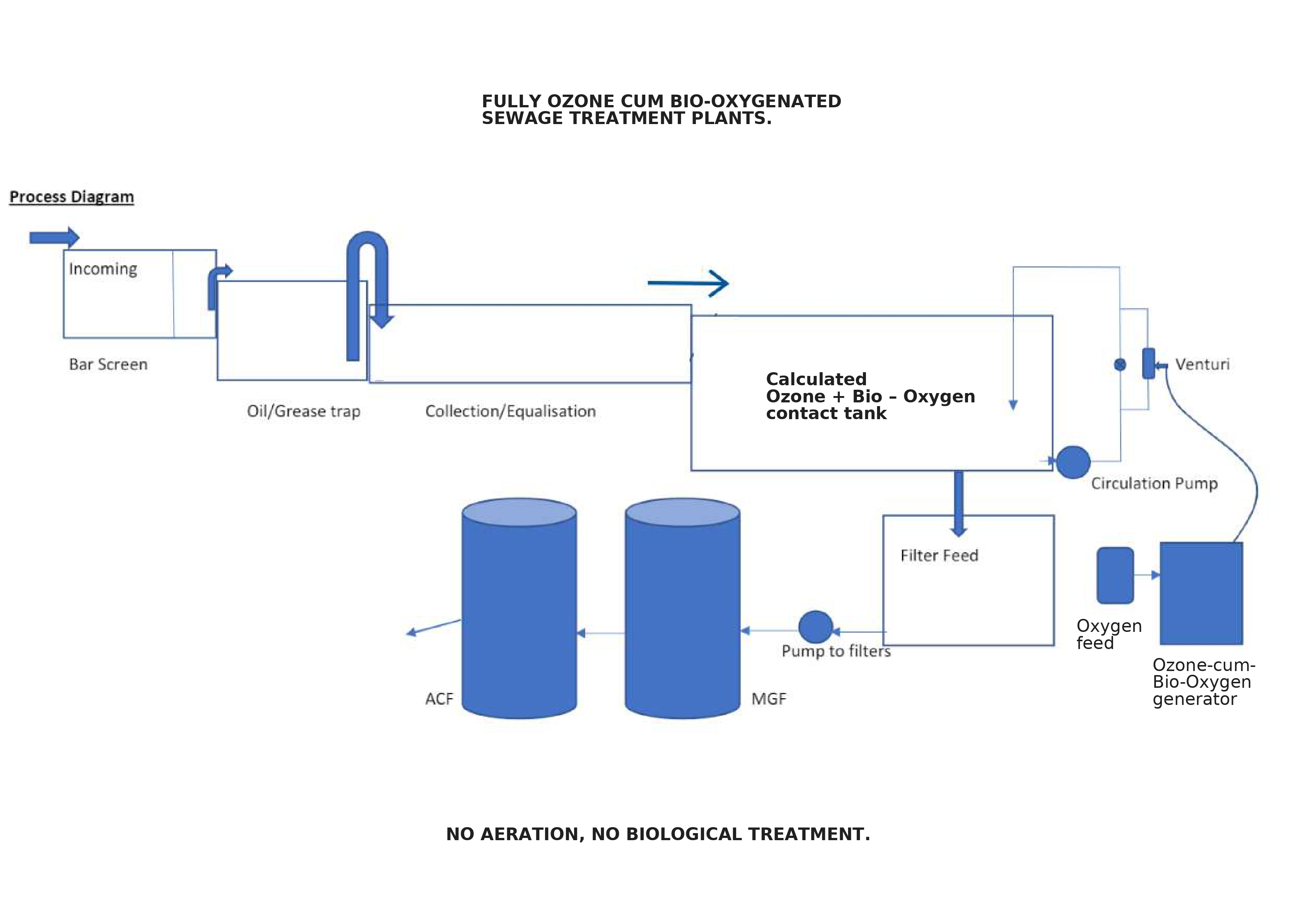
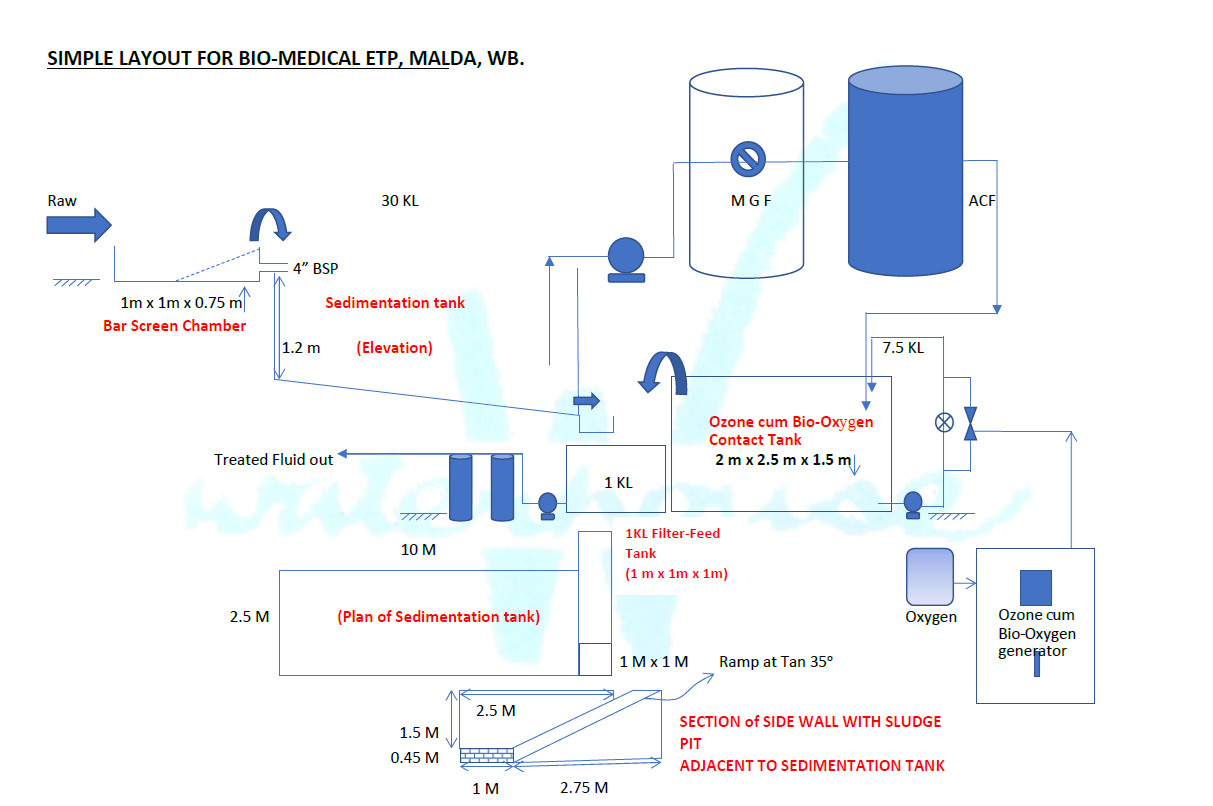
Influent sewage passes through a bar screen to remove large objects (cans, rags, sticks, plastic packets). This protects downstream equipment.
#b71c1c
First stage of PSTP is an oxygen-depleted zone where solids settle and scum floats. Anaerobic bacteria break down organic matter — no aeration energy needed.
#e65100
Denitrification occurs here — nitrates converted to nitrogen gas. Reduces total nitrogen in treated water. Critical for meeting discharge norms.
#2e7d32
Moving Bed Biofilm Reactor (MBBR) — plastic carriers provide high surface area for biofilm. Aerobic bacteria rapidly degrade remaining BOD/COD. Core of the PSTP.
#6a1b9a
Secondary settling tank separates biological sludge from treated water. Clarified effluent moves to tertiary treatment.
#00695c
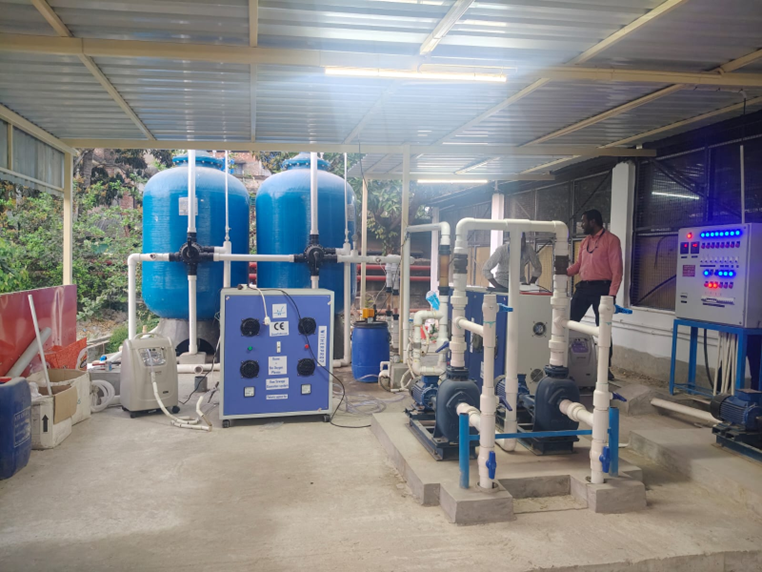
Pressure Sand Filter + Activated Carbon Filter remove TSS, colour, odour. Final chlorination disinfects treated water. Output: BOD <20, TSS <30 mg/L.
Process Flow Diagram